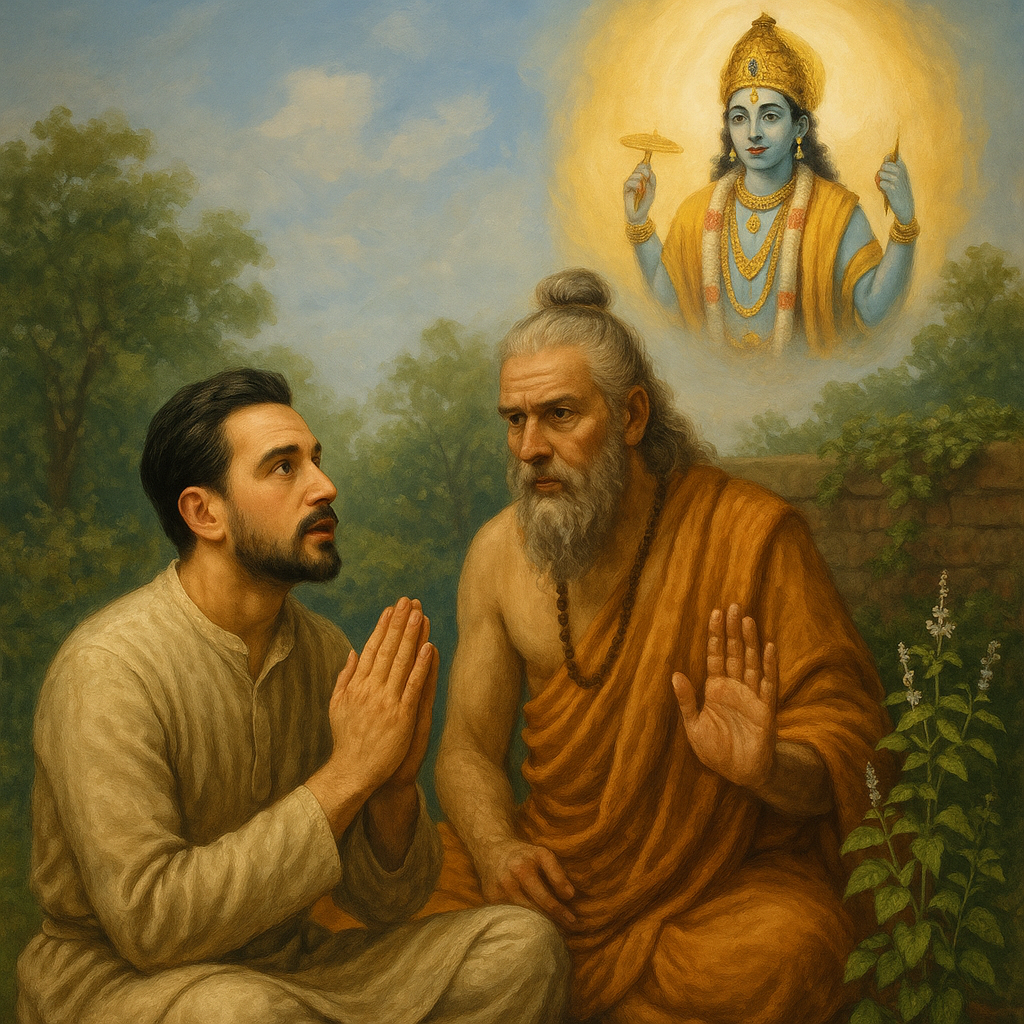
✨ Spiritual Context – The Story of Indira Ekadashi
Indira Ekadashi is observed during the waning phase of the moon in the month of Ashwin (September–October). This sacred day is especially powerful for liberating departed ancestors (pitrs) and purifying one’s own karma. The glories of this Ekadashi are found in the Brahmavaivarta Purana, narrated by Lord Krishna to King Yudhishthira.
In ancient times, there lived a devoted and righteous king named Indrasena, who ruled the kingdom of Mahishmati. He was a devout follower of Lord Vishnu and a protector of dharma. One day, the great sage Narada Muni visited his court and revealed a grave truth — “O King, your late father dwells in the realm of Yama, suffering due to incomplete atonement.”
Shocked and pained, King Indrasena inquired how he could help his beloved father attain liberation. Narada Muni explained that by observing Indira Ekadashi with sincerity, and offering the fruits of the vrata to his father, the king could relieve him from suffering and elevate his soul to higher realms.
Determined, King Indrasena fasted on Indira Ekadashi, strictly avoiding grains and focusing on japa, charity, and Vishnu bhakti. He offered prayers and the merit of the fast for the benefit of his father. That night, Lord Vishnu appeared in a dream, assuring the king that his father had been lifted from suffering and had reached Vaikuntha, the eternal abode.
The next day, Narada Muni confirmed the vision and blessed Indrasena for his unwavering devotion. From that moment, Indira Ekadashi became known as a day not only for self-purification, but for helping departed souls receive divine grace.
This Ekadashi reminds us of the importance of our spiritual lineage and our responsibility to honour those who came before us. It teaches us that devotion to Lord Vishnu can break even the deepest karmic bonds — for ourselves and for others.
📜 Importance Based on Scriptures
Indira Ekadashi is one of the most auspicious days for offering shraddha-like benefits to one’s departed family members. According to the Brahmavaivarta Purana, Lord Krishna tells Yudhishthira that by observing this Ekadashi, even ancestors stuck in lower planetary realms can be uplifted and granted peace.
This Ekadashi falls during the Pitru Paksha period — a time traditionally dedicated to honouring and praying for one’s ancestors. Fasting and dedicating the vrata to their spiritual upliftment is a deeply compassionate and purifying act.
In addition, fasting on Indira Ekadashi removes one’s own sins and prepares the soul for higher spiritual consciousness. Lord Krishna says that performing charity, feeding brahmanas, and chanting Vishnu’s names on this day is especially potent.
Vaishnavas often offer Tulasī leaves, Ganga water, and prasadam in remembrance of their pitrs. Even lighting a ghee lamp and chanting “Om Namo Bhagavate Vāsudevāya” with intention can create powerful vibrations of healing and liberation.
Indira Ekadashi is not just about ritual — it is a beautiful expression of love, gratitude, and service — to our forefathers and to Lord Vishnu Himself.
🛕 Rituals and Observance
On Indira Ekadashi, devotees wake early, bathe, and make a sankalpa (vow) to observe the fast with full devotion. This vrata involves strict avoidance of all grains, beans, pulses, and tamasic foods.
Suitable foods include:
- Fruits (apples, bananas, berries)
- Milk and yogurt
- Nuts and dry fruits
- Root vegetables (potatoes, sweet potatoes)
- Sabudana, sama rice, and Ekadashi-friendly meals
Some devotees observe nirjala vrata (without food and water), while others opt for fruit or milk fasts. The key is devotional consciousness, not just austerity.
Activities recommended include:
- Chanting extra Hare Krishna maha-mantra rounds
- Reading Srimad Bhagavatam or Bhagavad Gita
- Offering ghee lamp and Tulasi to Lord Vishnu
- Reciting the Indira Ekadashi Katha
- Praying for the upliftment of ancestors
Many also perform Pinda Daan or mentally dedicate prayers and offerings to their departed relatives. This day is especially favourable for acts of compassion, charity, and remembrance.
At sunset, devotees offer evening arati and continue prayers into the night. Observing this Ekadashi not only brings spiritual growth, but deep ancestral blessings and peace.
🌍 Why This Ekadashi Matters in Kali Yuga
In this age of Kali Yuga, where people often forget their heritage and spiritual roots, Indira Ekadashi provides a divine opportunity to reconnect with our ancestral responsibility and dharma.
Due to the fast pace of modern life, many souls pass without proper rituals or remembrance. Indira Ekadashi gives us a chance to pause and offer love, light, and prayer to those who came before us. In doing so, we not only uplift their souls, but clear spiritual blockages in our own life.
As Srila Prabhupada taught, devotion is not about external show — it’s about cleansing the heart. This Ekadashi allows us to go beyond self-interest and act for the welfare of others, both living and departed.
In Kali Yuga, where the mind is restless and dharma is weak, such days are islands of mercy. Indira Ekadashi empowers us to become more grateful, humble, and spiritually responsible. It’s not just about remembering the past — it’s about creating a future filled with grace and clarity.
By connecting with Lord Vishnu through this Ekadashi, we honour our roots and grow toward eternal truth. It is both a sacred duty and a gift.
🧠 Scientific Reasoning
While the purpose of Ekadashi is primarily spiritual, modern science supports many of its practices.
Fasting has been shown to:
- Trigger autophagy, the process of cellular repair
- Improve metabolism and insulin sensitivity
- Reduce inflammation and oxidative stress
- Enhance mental focus and clarity
On a psychological level, Ekadashi aligns with the lunar cycle — the 11th day is a powerful time to reset bodily rhythms, calm the mind, and cultivate introspection.
Fasting from grains reduces digestive load, allowing the body to channel energy toward healing and higher awareness. Sattvic foods like fruits, dairy, and nuts promote clarity and softness in mind — perfect for bhakti.
Emotionally, dedicating the fast for loved ones creates empathy, gratitude, and a sense of continuity — values that are often missing in our fast-paced world. Scientific studies have shown that rituals of remembrance have a positive impact on mental wellbeing and identity.
So, Indira Ekadashi is not just a day of abstinence — it is a holistic tool for spiritual, physical, and emotional realignment, given by the divine for our benefit.
🌅 Breaking the Fast on Dwadashi – 19 September 2025
Completing the vrata properly means breaking the fast during the Dwadashi Parana window. This is the final step that seals the spiritual benefit.
✅ How to Break the Fast:
- Wake early and complete your morning sadhana.
- Offer grains to the Lord — ideally khichdi, rice, or roti.
- Honour prasadam within the Parana window.
🕰️ Parana Timings – 19 September 2025
| Location | Parana Start | Parana End |
|---|---|---|
| Australia (Melbourne) | 06:14 AM | 10:14 AM |
| New Zealand (NZDT) | 06:15 AM | 10:15 AM |
Breaking fast late or early invalidates the vrata, according to shastra. Always check your local calendar if in doubt.